

On this page
Any yoga studio or teacher can now start a yoga video streaming platform: your own website and apps where members follow your classes at home, on demand or live. Whether it succeeds depends less on the technology and more on a handful of choices: where people watch, how you charge, how you film, who you partner with, how people find you and what your brand stands for. Here are six lessons for each of them.
1. Put your classes on the big screen
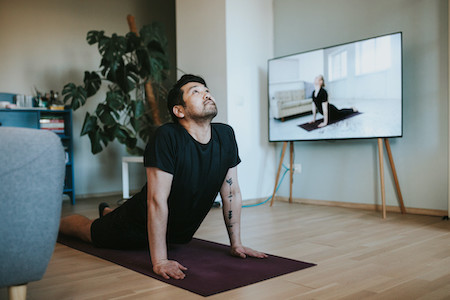
People watch video on several screens, but for yoga at home the TV wins. Following a teacher on a phone propped against a mat is awkward; on a large screen across the room you can see every pose without breaking your flow. Make sure members can watch on the TV, in two ways:
- Casting: with Chromecast and AirPlay support, members start a class on their phone and send it to the TV with one tap, without installing anything.
- Smart TV apps: your own app on the TV, controlled with the remote, gives regular members the smoothest experience.
2. Choose your own revenue model
On YouTube you earn a share of ad revenue, and you have little say over how much. On your own platform you set the price and the model. Common options for yoga teachers are:
- A subscription with monthly or yearly access to your full class library.
- Single purchases or bundles, such as a 30-day beginners’ programme or a series on yoga for back pain.
- Paid live classes, with the recording available afterwards.
You don’t have to pick just one. One member prefers a subscription, another wants to buy a single programme once. A free trial or discount voucher lowers the threshold to start. And you don’t need to leave YouTube or Instagram: use them for short, free videos that show your style and point to the full classes on your own platform.
3. Film classes people can actually follow
You don’t need a studio crew. A recent smartphone, a clip-on microphone and simple editing software are enough to produce good classes. What matters most:
- Clear sound: members often listen more than they watch, so your voice must be easy to hear.
- A calm background and good light: daylight from the side or front, no clutter behind you.
- The right camera angle: show your whole body and mat, and film standing and floor poses from a height that keeps alignment visible.
- Structure: organise classes by level, style and length, so members quickly find a 20-minute morning flow or a 60-minute yin class.
- The right export: on AudiencePlayer, deliver 8-bit H.264 video with stereo AAC audio. Filming in portrait for phones? Ask support to switch on the portrait (9:16) profiles before you upload, otherwise vertical video is shown small inside a 16:9 frame.
With more budget, a green screen lets you choose any background in editing. Need inspiration for what to film first? See our beginner yoga video ideas.
4. Start partnerships
You reach more people together than alone. Successful yoga platforms often grow through partners rather than ads alone. Some ideas:
- A yoga shop that gives buyers a voucher for a free trial on your platform.
- Guest classes from other teachers, or a joint programme with a physiotherapist or nutrition coach.
- A retreat or workshop where participants get access to follow-up classes online.
- Companies that offer your classes to their employees as part of a wellbeing programme.
Vouchers make these partnerships easy to run. On AudiencePlayer you can create thousands of unique codes at once, for example a separate batch for each partner, or a free trial code to hand out at a retreat.
5. Make sure people can find you
A good platform still needs visitors. Start with a solid basis: clear pages, short texts, good photos and one obvious call to action per page. Give every class page a descriptive title and description, so search engines understand what it is about.
Then build traffic over time. Writing blogs that answer questions your audience searches for creates more ways to be found. Short videos on TikTok, Instagram Reels and YouTube Shorts are now one of the main ways new students discover yoga teachers; our 30-day yoga content plan for Reels helps you get started. Collect email addresses as well, so you can tell people about new classes directly.
6. Turn your platform into a brand
People connect with a teacher and a story, not with a video library. Decide who your platform is for and what it helps them with. Is it busy parents who want short daily sessions, runners who need mobility, or people looking for calm and better sleep? Once that is clear, let it shape your class names, your texts, your visuals and the way you speak in your videos. Your own domain, logo and colours make the platform feel like yours rather than a channel on someone else’s site.
Your yoga platform with AudiencePlayer
AudiencePlayer gives yoga studios their own video platform in their own branding: a website, apps for iOS and Android and smart TV apps for Samsung and LG, with Chromecast and AirPlay available. You sell subscriptions, programmes and live classes, with vouchers and free trials, and payments go straight to your own account. Request a demo to see what your platform could look like.
Frequently Asked Questions
How do I start a yoga video streaming platform?
Decide who your classes are for and how you want to charge, record a first set of classes, and launch them on a video platform with your own website and payment options. Start with a focused library and add classes regularly rather than waiting until everything is perfect.
Should I offer a subscription or sell yoga classes separately?
A subscription works well if you add new classes regularly and want recurring revenue. Separate programmes or bundles suit structured courses, such as a beginners’ series. Many teachers combine both.
Can members watch my yoga classes on their TV?
Yes, if your platform supports casting or smart TV apps. With Chromecast and AirPlay, members send a class from their phone to the TV with one tap; a smart TV app lets them browse and play classes with the remote.
Should I stop posting free yoga videos on YouTube and Instagram?
No. Free short videos are how many people discover you. Use social media to show your style and invite viewers to your own platform for the full classes and programmes.
Can I stream live yoga classes and offer the recordings afterwards?
Yes. With AudiencePlayer you can stream a class live, free or paid, from your own streaming software such as OBS. The stream isn’t recorded automatically, so record the class locally and upload it as an on-demand video afterwards, so members who missed it can still join in.