


On this page
Starting your own video platform gives you two things YouTube and other social platforms can’t: control over how you earn from your videos, and a direct relationship with the people who watch them. That doesn’t mean you should leave YouTube. Social media is great for reach. Your own platform is where you turn that reach into paying members you actually know.
Social media for reach, your own platform for ownership
On YouTube, Instagram or TikTok the platform decides almost everything: which viewers see your video, how much you earn per view, which ads run next to your content and what happens when the rules change. That is the price of free distribution to a huge audience.
Platforms can also change course. Sellers on Vimeo’s On Demand marketplace found that out when Vimeo decided to close the service, leaving them to move their videos and buyers elsewhere (read what Vimeo sellers have to pay instead). The more of your income depends on someone else’s platform, the more vulnerable you are.
Your own video platform turns that around. Your content lives on your own website and in your own apps, under your own brand and domain, and you set the rules. The two biggest benefits follow from that.
1. Earn more by choosing your own revenue model
On YouTube most creators earn from advertising through the YouTube Partner Program. YouTube keeps a share of that ad revenue, and what is left per view is low and fluctuates with your niche, the season and where your viewers live. You need a very large audience to make a living from it, and you have no say in the price.
With your own platform you set the price and choose the revenue model that fits your audience. You can also combine several:
- Subscriptions: monthly, quarterly or yearly access for recurring revenue.
- Pay-per-view and rentals: sell or rent out a single film, series or event.
- Live events: sell tickets for a livestream and offer the recording afterwards.
- Courses and bundles: package videos into a programme or collection.
- Free accounts: give access to part of your content for free and turn those viewers into paying members later.
A quick calculation shows why this matters. Suppose only 1 or 2 percent of your followers is willing to pay a few euros a month for exclusive content. That small group can easily add up to more than the ad revenue from your whole audience, and it is recurring income that doesn’t depend on an algorithm.
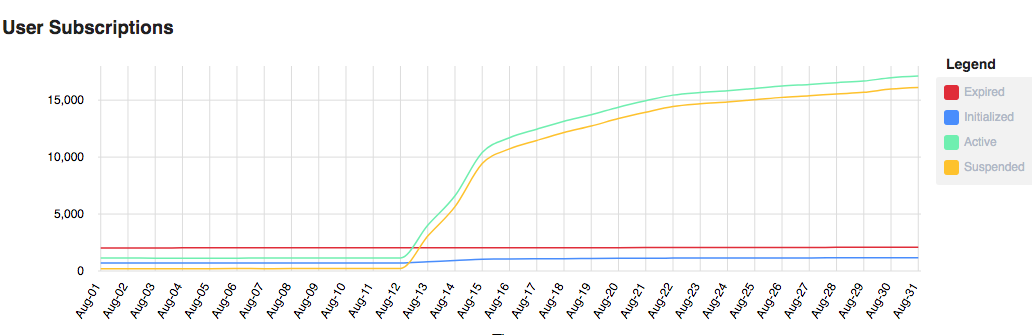
A small group of paying members can be worth more than a large number of ad-supported views.
2. Know your audience and automate your marketing
On social media you see aggregated statistics, but you don’t know who your viewers are and you can’t reach them outside the platform. Whether your next video even reaches your followers depends on the algorithm.
On your own platform viewers create an account. You get their email address and see what they watch, for how long and on which device. That lets you:
- Send automated emails, such as a welcome message, payment confirmations and reminders.
- Send push notifications when a new episode or livestream starts.
- Remind viewers who didn’t complete a purchase with an automatic abandoned-cart message.
- Sync contacts with your email or CRM tool and use viewing data for your ad campaigns.
- Reward loyal viewers with extra content, subscription time or a discount.
Because the data is yours, you can build marketing funnels that run by themselves: from a free sign-up to a first purchase and a long-term subscription. Do handle personal data carefully and in line with the GDPR: only ask for what you need and be clear about what you use it for. On AudiencePlayer the platform itself places no analytics or marketing trackers: you connect your own Google Tag Manager, Google Analytics or Facebook Pixel, and the built-in cookie bar asks viewers for consent.
How to combine YouTube and your own platform
The strongest setup uses both. Use YouTube, TikTok and Instagram for discovery: trailers, highlights, short tips and behind-the-scenes clips. Then point your most engaged followers to your own platform for the full episodes, the complete course, the live event or the archive. Exclusive content is what makes people sign up.
Benefits alone don’t make a platform a success, though. Read which three criteria for success you need to meet when you start a video platform.
Start your own video platform with AudiencePlayer
AudiencePlayer is a white-label video platform: your own website in your branding, apps for iOS, Android and smart TV, Chromecast and AirPlay, and built-in subscriptions, pay-per-view, vouchers and marketing tools. You connect your own Mollie or Stripe account, viewers pay with iDEAL, credit card or PayPal, and the revenue goes straight to your own bank account. Curious what it would look like with your content? Request a demo.
Frequently Asked Questions
Is it better to have your own video platform or to use YouTube?
You don’t have to choose. YouTube is best for reach and discovery, while your own video platform gives you control over your revenue, your brand and your viewer data. Most successful creators and organisations use YouTube to attract viewers and their own platform to earn from them.
How much does YouTube pay per 1,000 views?
There is no fixed rate. Ad earnings per 1,000 views vary widely by niche, country, season and video type, and YouTube keeps a share of the ad revenue. On your own platform you set the price yourself, for example a monthly subscription or a one-off purchase.
Can I keep posting on YouTube if I start my own video platform?
Yes, and it’s usually smart to do so. Post free content such as trailers, highlights and tips on YouTube, and keep the full episodes, courses or live events exclusive to your own platform.
Which revenue models can I use on my own video platform?
Common models are subscriptions, pay-per-view, rentals, tickets for livestreams, courses and bundles. You can also offer free accounts or free trials and combine several models on one platform.
Do I need technical knowledge to start my own video platform?
No. With a white-label platform such as AudiencePlayer, hosting, streaming, apps and payments are taken care of. You build your website with ready-made blocks, and if you prefer, the AudiencePlayer team sets up the platform for you.