OTT Use Cases Explained
OTT platforms are used across a wide range of industries to deliver video content directly to audiences over the internet. While many people associate OTT with entertainment streaming, its applications extend far beyond movies and TV shows.
Understanding OTT use cases helps businesses identify how streaming can support their goals, whether that is audience growth, monetization, or internal communication.
What Are OTT Use Cases?
OTT use cases refer to the different ways organizations use OTT platforms to deliver video content and create value. These use cases vary depending on the industry, audience, and business objectives.
From global streaming services to enterprise communication systems, OTT technology enables flexible and scalable video delivery.
Media and Entertainment
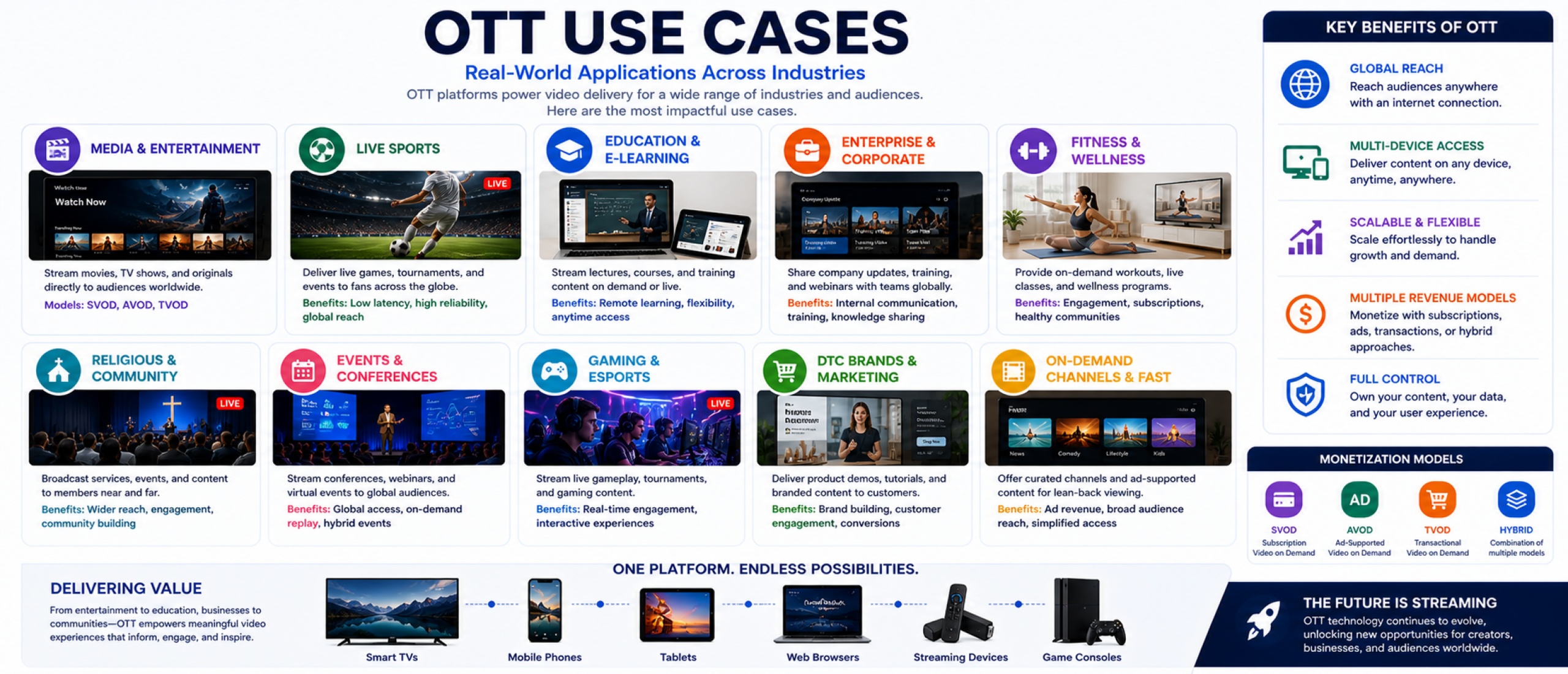
The most well-known OTT use case is in media and entertainment. Streaming platforms deliver movies, TV shows, documentaries, and live events directly to viewers.
These platforms often use subscription, ad-supported, or hybrid monetization models to generate revenue. They focus heavily on content libraries, personalization, and user experience to attract and retain audiences.
Live Sports Streaming
OTT platforms are widely used to stream live sports events. This includes professional leagues, tournaments, and niche sporting events.
Live sports require low latency, high reliability, and the ability to handle large spikes in concurrent viewers. OTT allows sports organizations to reach global audiences without relying on traditional broadcast networks.
Education and E-Learning
Educational institutions and online learning platforms use OTT to deliver lectures, courses, and training programs. Video content can be accessed on demand or streamed live.
This use case supports remote learning, flexible schedules, and global access to educational resources.
Corporate and Enterprise Communication
Businesses use OTT platforms for internal communication, training, and knowledge sharing. This includes live company announcements, webinars, and on-demand training videos.
OTT enables organizations to distribute content efficiently across teams and locations.
Fitness and Wellness Platforms
Fitness brands use OTT platforms to deliver workout programs, live classes, and on-demand training sessions. Users can access content from home or on the go.
This use case often relies on subscription-based models and focuses on user engagement and consistency.
Religious and Community Streaming
Religious organizations and community groups use OTT to broadcast services, events, and content to their audiences.
This allows them to reach members who cannot attend in person and expand their reach beyond physical locations.
Events and Conferences
OTT platforms are used to stream conferences, webinars, and virtual events. This includes both live sessions and recorded content.
OTT enables organizers to reach global audiences, offer on-demand access, and create hybrid event experiences.
Gaming and Esports
OTT is increasingly used in gaming and esports to deliver live streams, tournaments, and gaming-related content.
This use case requires high-performance streaming and interactive features to engage viewers.
Direct-to-Consumer Brands
Brands are using OTT platforms to connect directly with their audiences through video content. This includes product showcases, tutorials, and branded content.
OTT allows brands to build stronger relationships with customers and create new revenue streams.
Monetization Across OTT Use Cases
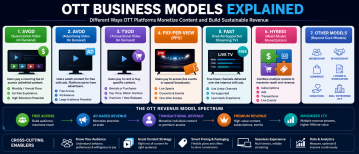
Different use cases rely on different monetization strategies. Some platforms use subscriptions, while others depend on advertising or one-time purchases.
The choice of monetization model depends on the type of content, audience behavior, and business goals.
Many platforms use hybrid models to maximize revenue and flexibility.
Benefits of OTT Across Industries
OTT platforms offer several advantages that make them suitable for a wide range of use cases.
They provide global reach, allowing content to be accessed from anywhere with an internet connection. They support multiple devices, enabling users to watch content on their preferred screens.
OTT platforms are also scalable, making it possible to grow audiences without major infrastructure changes.
These benefits make OTT a powerful tool for content distribution and audience engagement.
Choosing the Right OTT Use Case
Selecting the right use case depends on your business objectives and audience needs. Consider how video content fits into your overall strategy and what value it provides to your users.
Some businesses focus on entertainment and monetization, while others prioritize education, communication, or brand engagement.
Understanding your goals will help you design an OTT platform that delivers meaningful results.
Why OTT Use Cases Matter
OTT use cases highlight the versatility of streaming technology. They show how video can be used to inform, entertain, educate, and connect audiences across different industries.
By exploring these use cases, businesses can identify new opportunities to leverage OTT and build more effective video strategies.