How IPTV Works (Architecture Explained)
IPTV works by delivering video content over IP-based networks using a structured, multi-step pipeline. Unlike traditional broadcast systems, IPTV sends content only when a user requests it, making the entire process more efficient, flexible, and scalable.
At a high level, IPTV involves capturing video, processing it into digital formats, distributing it through network infrastructure, and delivering it to a playback device in real time or on demand.
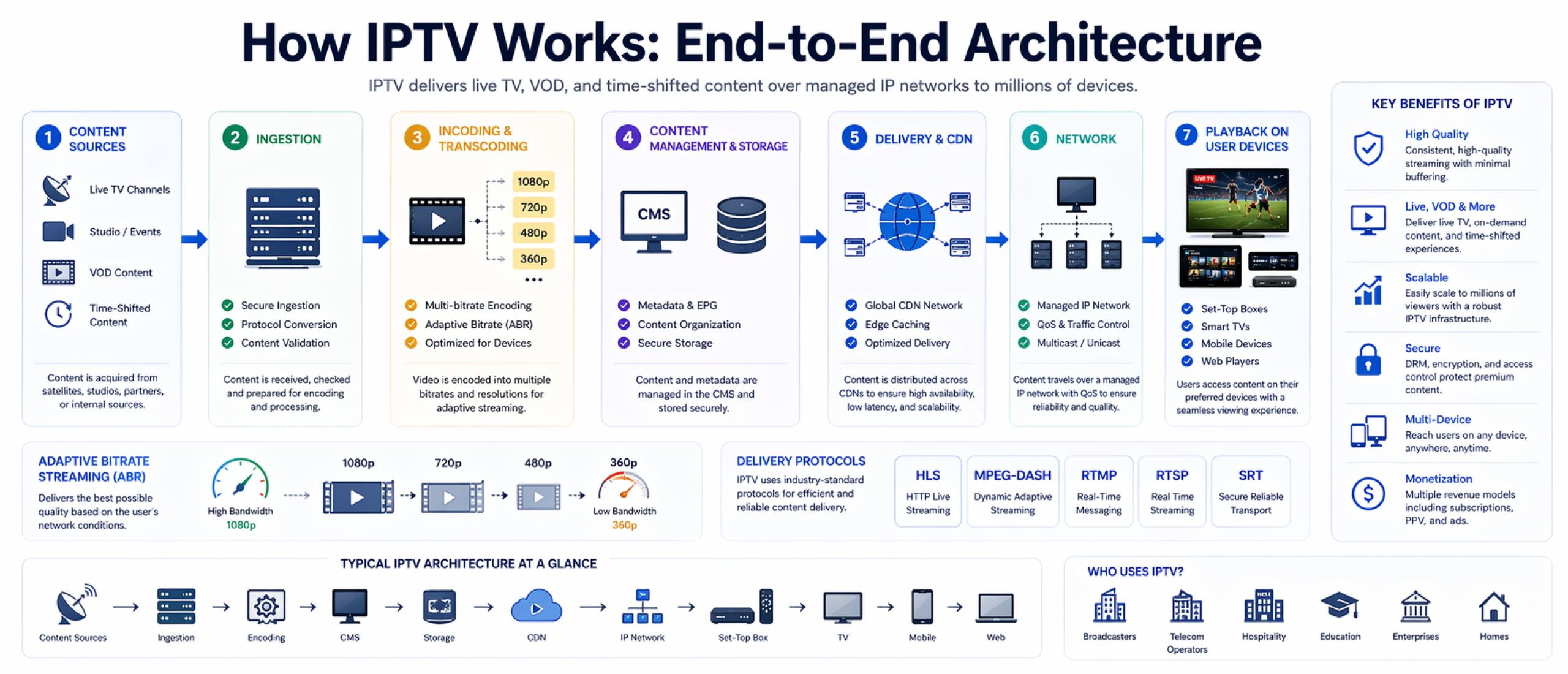
End-to-End IPTV Workflow
The IPTV delivery process can be broken down into several key stages. Each stage plays a critical role in ensuring smooth playback and high-quality video delivery.
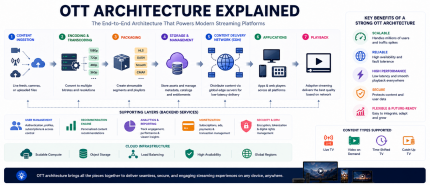
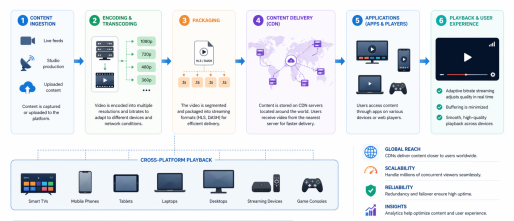
1. Content Ingestion
The process begins with content ingestion. This involves acquiring video from various sources such as live broadcasts, satellite feeds, studio recordings, or existing media libraries.
Live content is captured in real time, while on-demand content is typically uploaded and stored for later access. At this stage, raw video is prepared for processing within the IPTV system.
2. Encoding and Transcoding
Once content is ingested, it is encoded into digital formats suitable for streaming. Encoding compresses raw video into manageable file sizes without significantly reducing quality.
Transcoding is then used to create multiple versions of the same content at different resolutions and bitrates. This allows the system to support adaptive streaming, where video quality automatically adjusts based on a user’s internet connection.
Common output formats include streaming-ready segments that can be delivered efficiently across different devices and network conditions.
3. Content Storage and Management
After encoding, content is stored in servers or cloud-based storage systems. Video libraries for VOD services are maintained here, along with metadata such as titles, descriptions, thumbnails, and playback information.
This stage also involves content management systems that organize and control how content is accessed, updated, and distributed across the platform.
4. Content Delivery via CDN
To ensure fast and reliable delivery, IPTV platforms use content delivery networks. A CDN distributes video content across multiple geographically located servers, allowing users to stream from a server that is physically closer to them.
This reduces latency, improves load times, and minimizes buffering. CDNs are essential for scaling IPTV services to large audiences.
5. Middleware and Service Layer
Middleware acts as the control layer of an IPTV system. It connects the backend infrastructure with the user interface and manages how users interact with the service.
This layer handles user authentication, channel listings, electronic program guides, subscription management, and personalization features. It ensures that users see the correct content based on their account, region, and preferences.
6. Playback on End Devices
The final stage is playback. Content is delivered to the user’s device through an IPTV app, web player, or set-top box.
The video player receives data packets and buffers them to ensure smooth playback. Adaptive bitrate streaming adjusts video quality dynamically, providing a consistent viewing experience even if network conditions change.
Unicast vs Multicast in IPTV
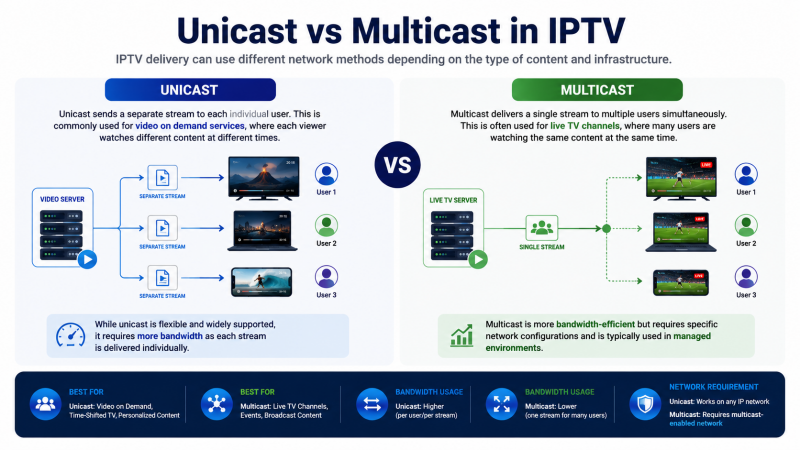
IPTV delivery can use different network methods depending on the type of content and infrastructure.
Unicast
Unicast sends a separate stream to each individual user. This is commonly used for video on demand services, where each viewer watches different content at different times.
While unicast is flexible and widely supported, it requires more bandwidth as each stream is delivered individually.
Multicast
Multicast delivers a single stream to multiple users simultaneously. This is often used for live TV channels, where many users are watching the same content at the same time.
Multicast is more bandwidth-efficient but requires specific network configurations and is typically used in managed environments.
IPTV Protocols and Streaming Formats
IPTV relies on a range of protocols and streaming formats to deliver video efficiently across different devices and networks.
HTTP-Based Streaming
Modern IPTV platforms often use HTTP-based streaming protocols. These break video into small segments that can be delivered over standard web infrastructure.
This approach improves compatibility and scalability, allowing IPTV services to run over existing internet infrastructure without requiring specialized network setups.
Adaptive Bitrate Streaming
Adaptive bitrate streaming enables the player to switch between different quality levels in real time. If a user’s connection slows down, the system automatically delivers a lower bitrate stream to prevent buffering.
This is a key component of delivering a smooth user experience across varying network conditions.
Role of Set-Top Boxes and Applications
IPTV services can be accessed through both dedicated hardware and software applications.
Set-Top Boxes
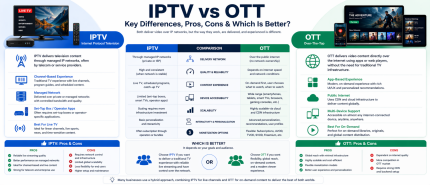
Set-top boxes are specialized devices designed to decode and display IPTV content on televisions. They often come pre-configured for specific services and provide a traditional TV-like experience.
Applications and Web Players
Modern IPTV platforms increasingly rely on apps and browser-based players. These allow users to access content on smart TVs, mobile devices, and computers without the need for dedicated hardware.
This shift toward app-based delivery aligns IPTV more closely with broader streaming ecosystems.
Latency, Buffering, and Performance Considerations
Delivering high-quality IPTV experiences requires careful management of latency, buffering, and network performance.
Latency refers to the delay between content being captured and displayed to the user. Lower latency is especially important for live events such as sports and news broadcasts.
Buffering occurs when the player temporarily pauses to load more data. Efficient encoding, CDN usage, and adaptive streaming help minimize buffering issues.
Performance depends on several factors, including network stability, server capacity, and device capabilities. Optimizing these elements is essential for maintaining consistent video quality.
Why IPTV Architecture Matters
Understanding IPTV architecture is important because it directly impacts scalability, reliability, and user experience.
A well-designed IPTV system can handle large audiences, deliver high-quality streams, and support multiple devices without performance issues. Poor architecture, on the other hand, can lead to buffering, downtime, and user dissatisfaction.
For OTT providers and media businesses, investing in the right IPTV architecture is a key factor in building a competitive and sustainable streaming platform.