How OTT Works (Streaming Architecture Explained)
OTT streaming delivers video content over the public internet directly to users through apps and web players. Unlike traditional broadcast systems or managed IPTV networks, OTT platforms are designed to operate at global scale using cloud infrastructure, content delivery networks, and adaptive streaming technologies.
The goal of an OTT system is simple: deliver high-quality video to any device, anywhere, with minimal buffering and maximum reliability. To achieve this, OTT platforms rely on a layered architecture that combines content processing, distribution, and playback optimization.
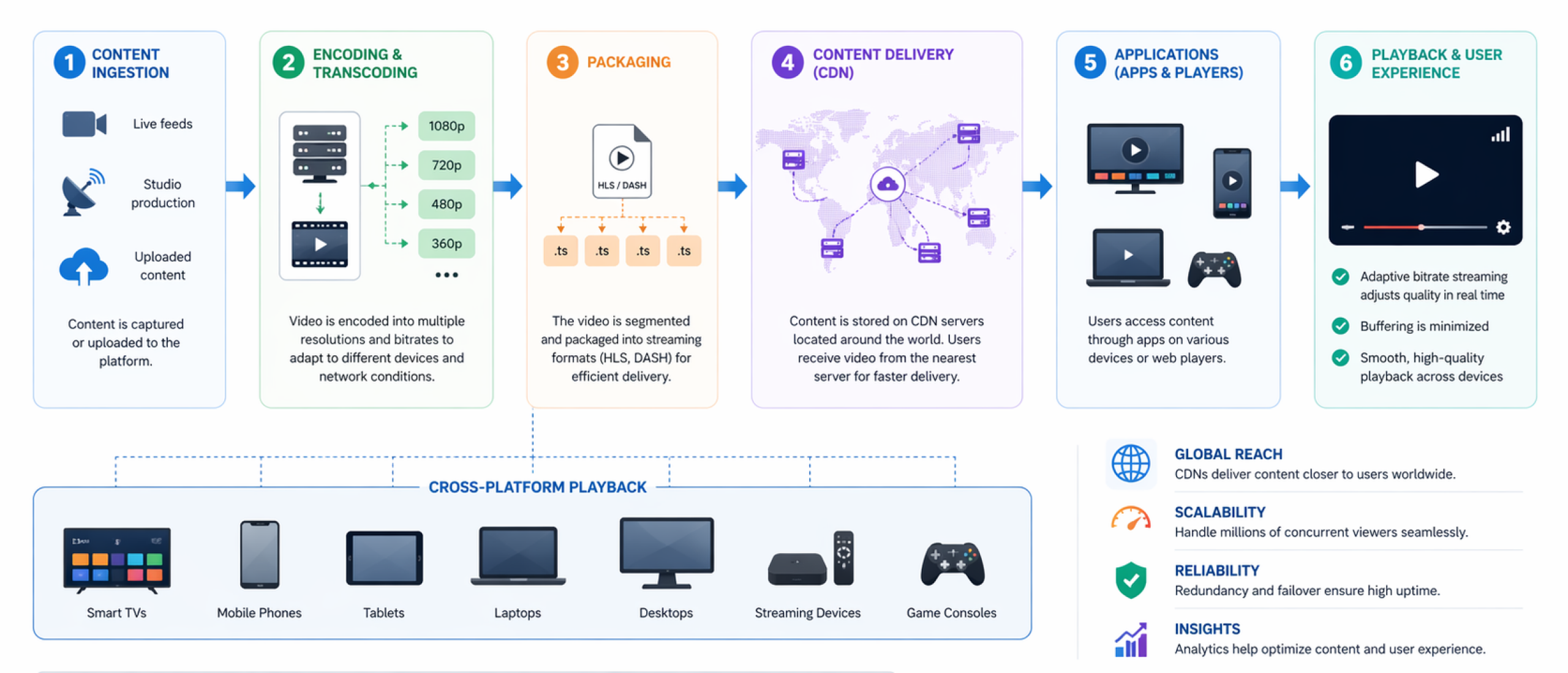
End-to-End OTT Streaming Workflow
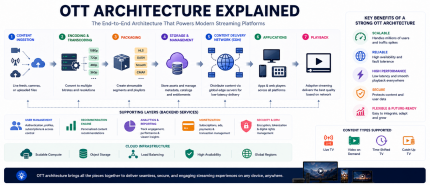
OTT delivery follows a structured pipeline that transforms raw video into a format that can be streamed efficiently across different devices and network conditions.
1. Content Ingestion
The process starts with content ingestion. Video is sourced from live feeds, studio productions, or uploaded media files. Live content is captured in real time, while on-demand content is prepared and stored for later playback.
At this stage, raw video is collected and prepared for encoding, ensuring it can be processed consistently across the platform.
2. Encoding and Transcoding
Once ingested, video is encoded into compressed digital formats suitable for streaming. Transcoding then creates multiple versions of the same video at different resolutions and bitrates.
This allows OTT platforms to deliver adaptive streaming, where video quality adjusts automatically based on a user’s internet speed and device capabilities.
Typical outputs include segmented video files that can be delivered progressively, ensuring smooth playback even under changing network conditions.
3. Packaging for Streaming
After encoding, video is packaged into streaming formats that can be delivered over standard web protocols. This involves breaking the video into small chunks and organizing them into playlists that the player can interpret.
This step enables compatibility across devices and allows players to switch between quality levels seamlessly during playback.
4. Content Delivery via CDN
Content delivery networks are a critical part of OTT architecture. Instead of serving video from a single origin server, CDNs distribute content across multiple edge servers located around the world.
When a user requests a video, it is delivered from the nearest available server, reducing latency and improving load times. This is what allows OTT platforms to scale globally and handle large audiences.
5. Application Layer (Apps and Web Players)
The application layer is where users interact with the OTT service. This includes mobile apps, smart TV applications, and web-based players.
These applications handle content discovery, navigation, playback controls, and user preferences. They also communicate with backend systems to retrieve video streams, metadata, and user-specific data.
A well-designed app layer is essential for delivering a smooth and engaging user experience.
6. Playback and User Experience
Once a user selects content, the video player begins requesting segments from the CDN. The player buffers data and starts playback while continuing to load additional segments in the background.
Adaptive bitrate streaming ensures that video quality adjusts dynamically based on network conditions. If bandwidth drops, the player switches to a lower quality stream to avoid buffering. If conditions improve, it switches back to higher quality.
This continuous adjustment is key to maintaining a consistent viewing experience.
Role of Applications in OTT Streaming
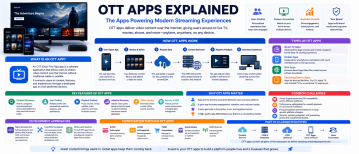
Applications are at the core of OTT delivery. Unlike IPTV, where access is often tied to specific hardware, OTT platforms are built around apps that run on a wide range of devices.
These apps are responsible for presenting content, managing user sessions, and ensuring smooth playback. They also enable features such as search, recommendations, watchlists, and personalized home screens.
Because the app is the primary touchpoint for users, its performance and usability directly impact engagement and retention.
Why CDNs Are Essential for OTT
Without CDNs, OTT streaming at scale would not be possible. Serving video from a single location would create latency issues and overload servers during high traffic periods.
CDNs solve this by caching content closer to users and distributing load across multiple servers. This reduces buffering, improves startup times, and ensures consistent performance across regions.
For global OTT platforms, CDN strategy is a key factor in delivering a reliable service.
Adaptive Streaming and Playback Optimization
Adaptive streaming is one of the most important technologies in OTT delivery. It allows the player to adjust video quality in real time based on available bandwidth and device performance.
This approach ensures that users can continue watching content without interruptions, even if their internet connection fluctuates.
Playback optimization also includes buffering strategies, fast start times, and efficient segment loading. Together, these elements create a seamless viewing experience.
Scalability and Cloud Infrastructure
OTT platforms are typically built on cloud-based infrastructure. This allows them to scale resources up or down based on demand.
During peak events, such as live sports or major releases, the system can handle large spikes in traffic without degrading performance. When demand decreases, resources can be reduced to optimize costs.
This flexibility is one of the key advantages of OTT over traditional broadcast systems.
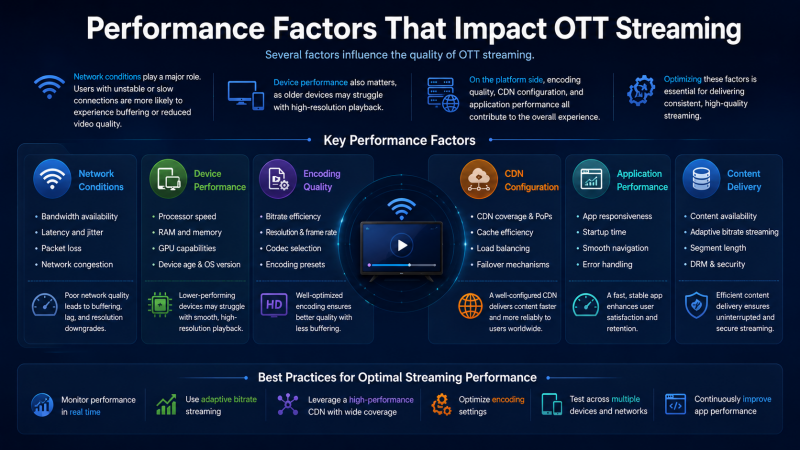
Performance Factors That Impact OTT Streaming
Several factors influence the quality of OTT streaming.
Network conditions play a major role. Users with unstable or slow connections are more likely to experience buffering or reduced video quality. Device performance also matters, as older devices may struggle with high-resolution playback.
On the platform side, encoding quality, CDN configuration, and application performance all contribute to the overall experience.
Optimizing these factors is essential for delivering consistent, high-quality streaming.
Why OTT Architecture Matters
Understanding how OTT works is important because it directly impacts user experience, scalability, and business performance.
A well-designed OTT architecture ensures smooth playback, fast load times, and the ability to reach users across multiple devices and regions. It also supports advanced features such as personalization, analytics, and monetization.
For streaming businesses, investing in the right OTT architecture is critical to building a competitive and scalable platform.