IPTV vs OTT: What’s the Difference?
IPTV and OTT are often used interchangeably, but they represent two different approaches to delivering video content. Understanding the difference is important for choosing the right strategy for your streaming business.
Both IPTV and OTT use internet protocol to deliver video, but they differ in how content is distributed, managed, and consumed by users.
What Is IPTV?
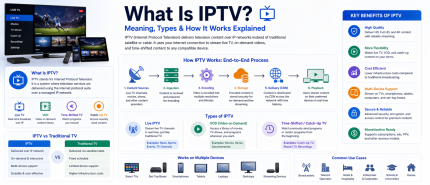
IPTV refers to television-style content delivered over IP networks, often within a managed or controlled environment. It typically includes live TV channels, scheduled programming, and features such as electronic program guides.
IPTV services are commonly delivered through set-top boxes, smart TV apps, or operator-controlled platforms, and may run on private networks rather than the open internet.
What Is OTT?
OTT stands for over-the-top streaming. It refers to video content delivered directly over the public internet without the need for traditional cable or satellite infrastructure.
OTT services are usually app-based and accessible across multiple devices, including smartphones, tablets, smart TVs, and web browsers. They are designed for flexibility, on-demand access, and global reach.
Key Differences Between IPTV and OTT
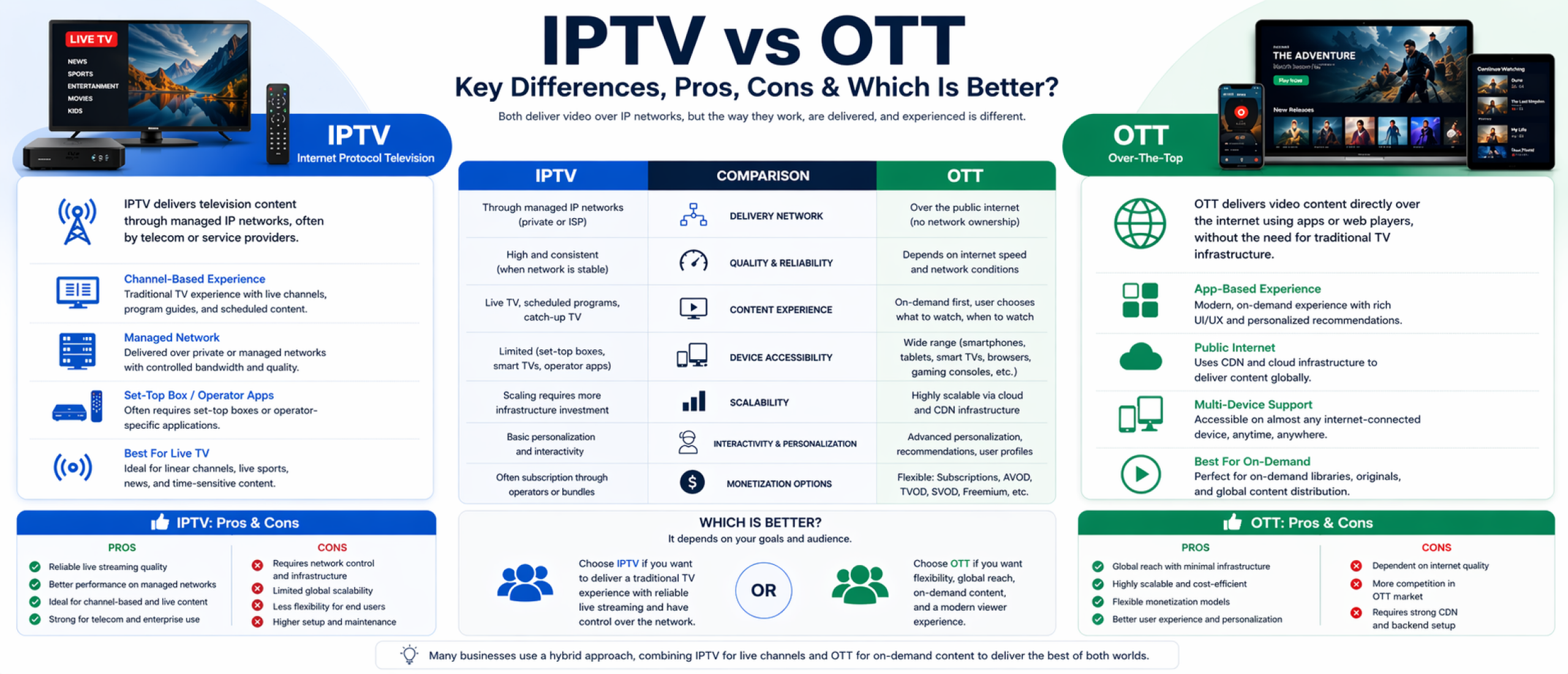
The main differences between IPTV and OTT come down to delivery method, infrastructure, user experience, and scalability.
Network and Delivery
IPTV often operates over managed networks where the provider controls bandwidth and delivery conditions. This allows for more predictable performance, especially for live TV.
OTT runs over the public internet, which means performance can vary depending on the user’s connection, but it also enables global accessibility without network restrictions.
Content Experience
IPTV is designed to replicate traditional television. It includes channel-based navigation, scheduled programming, and live broadcasting as a core feature.
OTT is typically on-demand first. Users browse content libraries, choose what to watch, and start playback instantly without following a fixed schedule.
Device Accessibility
IPTV has historically been associated with set-top boxes and operator-specific devices, although modern IPTV services now support apps and smart TVs.
OTT is built for multi-device access from the start, allowing users to stream content on virtually any internet-connected device.
Scalability and Reach
IPTV systems can be highly efficient within controlled environments, but scaling globally often requires significant infrastructure investment.
OTT platforms are inherently scalable, leveraging the public internet and cloud-based infrastructure to reach users anywhere in the world.
Interactivity and Personalization
OTT platforms typically offer stronger personalization features, such as recommendations, user profiles, and data-driven content discovery.
IPTV systems can include interactive features, but they are often more structured and less dynamic compared to OTT platforms.
When to Use IPTV vs OTT
The choice between IPTV and OTT depends on your business model, audience, and distribution goals.
When IPTV Makes More Sense
IPTV is a strong choice when you need to deliver a traditional television experience with reliable live streaming. It works well in environments where you can control the network, such as telecom services, enterprise networks, or regional broadcasting systems.
It is also suitable for services that rely heavily on scheduled programming and channel-based navigation.
When OTT Is the Better Option
OTT is ideal for reaching a global audience with minimal infrastructure barriers. It supports flexible viewing experiences, on-demand content, and rapid scaling.
OTT is often the preferred choice for startups, content creators, and businesses focused on direct-to-consumer distribution.
Can IPTV and OTT Work Together?
In practice, many modern video platforms use a combination of IPTV and OTT technologies. This hybrid approach allows businesses to deliver live TV through IPTV-style systems while also offering on-demand content through OTT apps.
Combining both models can provide greater flexibility, improved user experience, and broader audience reach.
Which One Is Better?
There is no single answer to whether IPTV or OTT is better. Each approach has its own strengths and limitations.
IPTV offers controlled delivery and a familiar television experience, while OTT provides flexibility, scalability, and global accessibility.
The best choice depends on your specific goals, technical capabilities, and the type of experience you want to deliver to your audience.
Choosing the Right Strategy
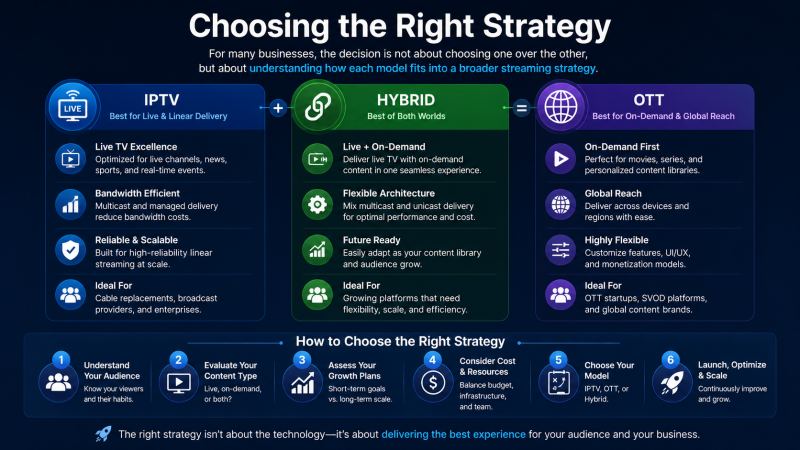
For many businesses, the decision is not about choosing one over the other, but about understanding how each model fits into a broader streaming strategy.
By evaluating your audience, content type, and growth plans, you can determine whether IPTV, OTT, or a hybrid approach is the most effective way to deliver your service.