Upload Speed vs Download Speed
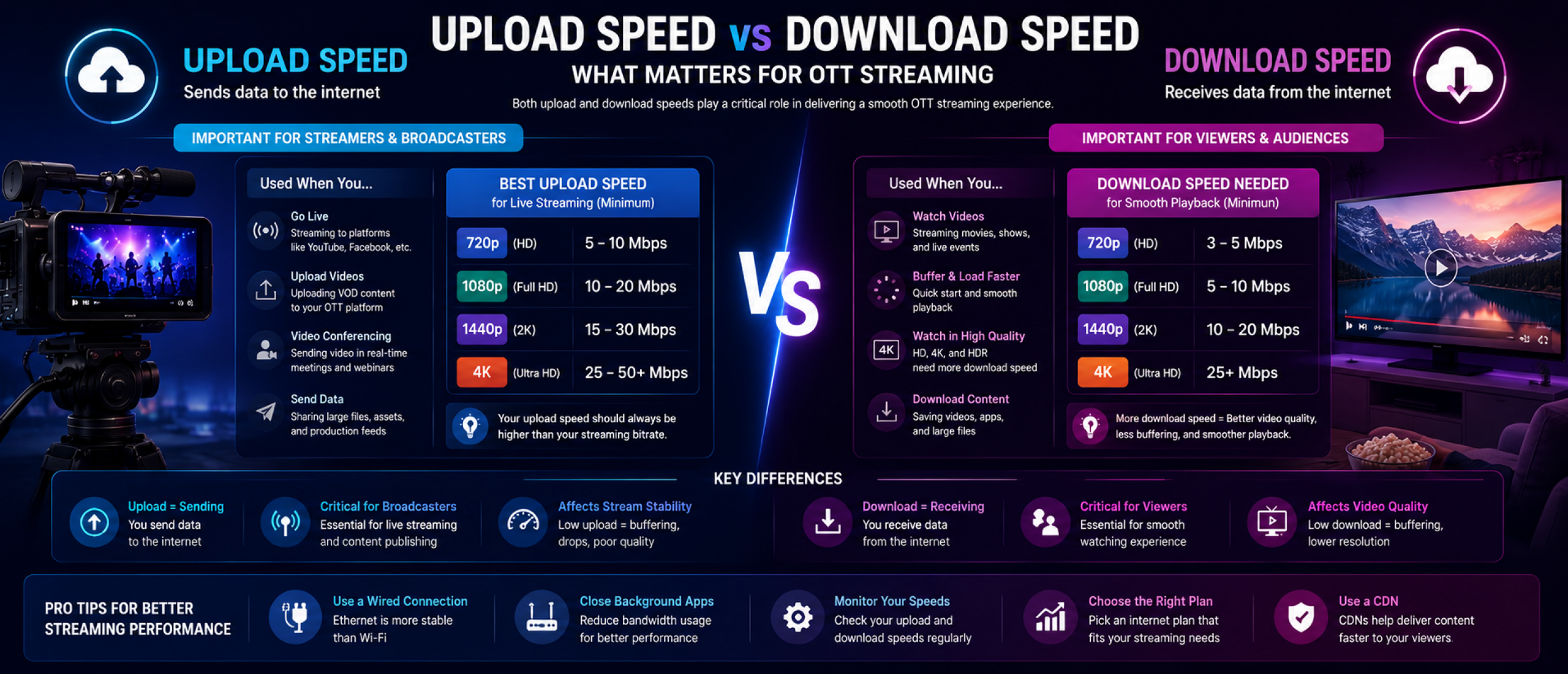
Upload speed and download speed are both important for streaming, but they serve completely different purposes. Download speed affects how viewers receive video content, while upload speed affects how broadcasters and OTT platforms send video content to the internet.
For viewers watching Netflix, YouTube, or OTT platforms, download speed is usually the priority. For streamers, broadcasters, live event operators, and OTT services publishing content, upload speed becomes critical.
Understanding the difference between upload and download bandwidth is essential for building reliable streaming workflows and delivering high-quality video experiences.
What Is Download Speed?
Download speed measures how quickly data can move from the internet to a user’s device. This affects how fast viewers can load videos, stream content, download files, and browse websites.
For OTT viewers, download speed directly impacts playback quality, buffering, and resolution support. Higher download speeds allow smoother playback of HD and 4K streams.
Most home internet connections prioritize download bandwidth because consumers typically consume more content than they upload.
What Is Upload Speed?
Upload speed measures how quickly data can be transmitted from a device to the internet. This is especially important for live streaming, video conferencing, cloud uploads, and OTT content publishing.
When broadcasters stream live events, upload speed determines how reliably video can be sent from encoders or production systems to streaming servers.
OTT platforms also depend on upload bandwidth for uploading movies, episodes, clips, trailers, and live feeds into their streaming infrastructure.
Why Upload Speed Matters More for Live Streaming
Live streaming requires continuous real-time video transmission. If upload bandwidth becomes unstable, viewers may immediately experience buffering, dropped frames, lower quality, or stream interruptions.
Unlike on-demand viewing, live broadcasts cannot pause to recover from network instability. This makes upload consistency extremely important for professional OTT streaming.
For live sports, concerts, webinars, and event streaming, upload performance often becomes the most critical technical requirement.
Why Download Speed Matters for Viewers
Viewers rely on download bandwidth to receive video streams smoothly. If download speeds are too low, videos may buffer, reduce quality automatically, or fail to load entirely.
Higher-quality formats such as 1080p and 4K require more download capacity because larger amounts of video data are delivered every second.
Adaptive bitrate streaming helps OTT platforms adjust playback quality based on available download bandwidth to reduce interruptions.
How Upload and Download Speeds Work Together
OTT streaming depends on both upload and download performance working together across the entire delivery chain.
Broadcasters upload content into streaming infrastructure, while viewers download that content onto their devices.
If upload performance is weak, the stream may never reach viewers properly. If download performance is weak, viewers may struggle to watch the content smoothly.
Reliable OTT delivery requires stable bandwidth on both sides of the streaming workflow.
Typical Upload vs Download Speeds
Most residential internet plans offer much higher download speeds than upload speeds. For example, a connection may provide 300 Mbps download but only 20 Mbps upload.
This setup works well for consumers watching content but can create limitations for broadcasters uploading high-quality live streams.
Fiber internet connections often provide more balanced upload and download performance, making them ideal for professional streaming environments.
Upload Speed vs Download Speed for OTT Platforms
OTT platforms need strong upload infrastructure to ingest live feeds, process content, and publish media libraries efficiently.
At the same time, viewers require reliable download speeds to stream content across smart TVs, mobile devices, browsers, and connected TV apps.
Streaming businesses must optimize both sides of the experience to maintain stable playback quality and audience satisfaction.
How Bitrate Relates to Upload and Download Speed
Bitrate refers to the amount of video data transmitted every second during streaming.
For broadcasters, upload speed must comfortably exceed the outgoing stream bitrate to maintain stability. For viewers, download speed must exceed the incoming stream bitrate to play the content smoothly.
This is why high-bitrate 4K streaming increases bandwidth requirements for both streamers and audiences.
Best Internet Connections for Streaming
Fiber internet is generally the best option for OTT workflows because it offers high upload speeds, strong download performance, and lower latency.
Cable internet can support standard streaming, but upload capacity is often limited compared to fiber.
Wireless and mobile networks may work for casual streaming but can introduce instability during professional broadcasts or large live events.
Why Understanding Bandwidth Matters
Many streaming problems are caused by misunderstanding the difference between upload and download bandwidth.
Viewers often focus on download speed because they consume content, while broadcasters must prioritize upload stability to deliver content reliably.
For OTT businesses, balancing both sides of the streaming workflow is essential for maintaining high-quality viewing experiences and scalable platform performance.