Upload Speed for 4K Streaming
4K streaming delivers significantly higher image quality than HD video, but it also requires much more bandwidth. Whether you're broadcasting live events, streaming sports, running an OTT platform, or uploading premium video content, sufficient upload speed is essential for maintaining reliable 4K delivery.
Because 4K video contains four times the pixel count of 1080p content, more data must be transmitted every second. This increases both bitrate requirements and the amount of upload bandwidth needed to support stable streaming.
Without adequate upload speed, 4K streams may experience buffering, dropped frames, reduced quality, or playback interruptions.
Why 4K Streaming Requires More Upload Bandwidth
Higher resolutions generate larger video files and require higher bitrates to preserve image quality. While 1080p streaming can often perform well at moderate bitrates, 4K content needs substantially more data to maintain sharp visuals, fine detail, and smooth motion.
This becomes even more important for sports, gaming, concerts, and live events where fast-moving scenes require additional bitrate to avoid compression artifacts.
As a result, upload bandwidth requirements increase significantly when moving from HD to 4K workflows.
Recommended Upload Speed for 4K Streaming
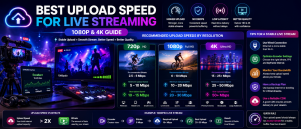
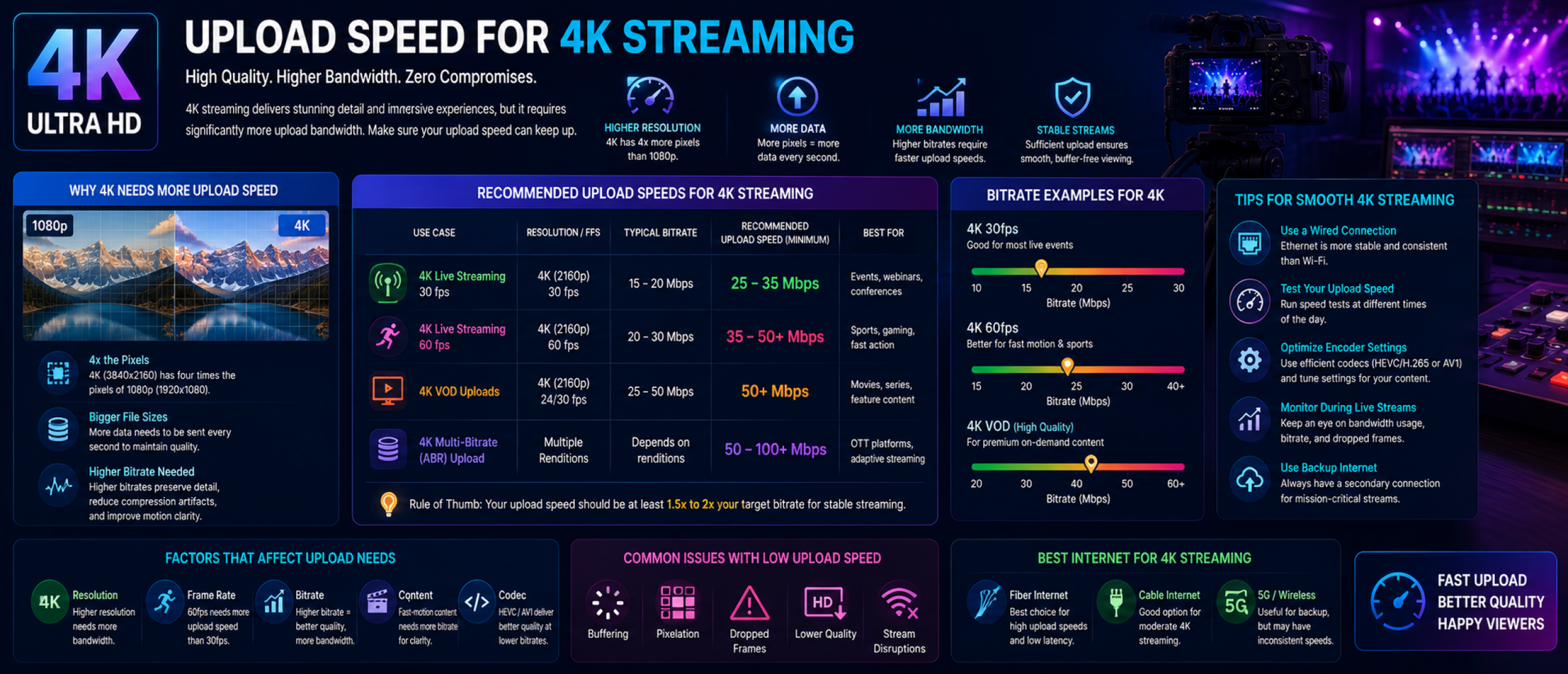
For most professional 4K live streaming workflows, upload speeds of at least 25–50 Mbps are recommended.
Higher-end productions often require even more bandwidth, particularly when streaming at 60 frames per second, using premium quality settings, or delivering sports and live events.
Broadcasters should avoid running streams close to their maximum upload capacity. Maintaining bandwidth overhead helps protect against network fluctuations and improves reliability.
4K Bitrate Requirements
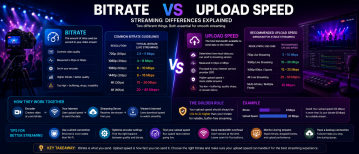
Bitrate plays a major role in determining upload speed requirements. While exact settings vary depending on the codec and streaming platform, 4K streams commonly use bitrates between 15 Mbps and 30 Mbps or higher.
Professional broadcasts may exceed these ranges when prioritizing maximum image quality.
Because bitrate directly consumes upload bandwidth, stream settings should always be matched to available network capacity.
Live 4K Streaming vs VOD Uploads
Live 4K streaming places the greatest demands on upload speed because video must be delivered continuously in real time.
Any bandwidth instability can immediately affect viewers through buffering, reduced quality, or stream interruptions.
Video-on-demand uploads are more flexible because content can upload over time, but large 4K media files still benefit from faster upload speeds to reduce publishing delays.
How Frame Rate Impacts Upload Requirements
Frame rate has a significant impact on bandwidth consumption. Streaming at 60fps requires more data than streaming at 30fps because twice as many frames are transmitted every second.
This is particularly important for sports, gaming, and action-heavy content where higher frame rates improve motion clarity.
Broadcasters planning 4K60 workflows should ensure sufficient upload capacity to support both resolution and frame rate requirements.
How Modern Codecs Reduce Bandwidth Usage
Modern codecs such as HEVC (H.265) and AV1 can deliver similar visual quality at lower bitrates compared to older codecs like H.264.
This reduces upload bandwidth requirements while maintaining strong image quality.
Many OTT platforms use advanced codecs to improve delivery efficiency and lower infrastructure costs.
4K Streaming for OTT Platforms
OTT services offering 4K content must consider upload bandwidth across multiple workflows, including content ingestion, live streaming, cloud transcoding, and adaptive bitrate delivery.
Large streaming platforms often upload high-quality master files to cloud infrastructure where multiple viewing formats are generated automatically.
This approach simplifies delivery while maintaining support for a wide range of devices and internet conditions.
Common Problems Caused by Insufficient Upload Speed
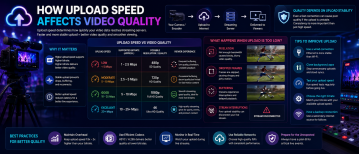
When upload bandwidth is too low, 4K streams often suffer from pixelation, reduced image quality, buffering, and dropped frames.
Viewers may also experience increased latency during live broadcasts or automatic quality reductions as streaming systems attempt to compensate for limited bandwidth.
These issues are especially noticeable in high-resolution content because viewers expect premium visual quality from 4K experiences.
Best Internet Connection for 4K Streaming
Fiber internet is generally the preferred option for 4K streaming because it offers high upload speeds, low latency, and stable performance.
Cable connections may support some 4K workflows, but upload limitations can become a bottleneck for professional broadcasts.
For mission-critical live events, many broadcasters use dedicated connections and backup internet services to reduce the risk of interruptions.
Best Practices for Reliable 4K Streaming
Always maintain upload bandwidth above your target bitrate to allow room for network fluctuations. Using wired ethernet connections instead of Wi-Fi improves stability and reduces interference.
Monitoring bandwidth usage during broadcasts can help identify issues before they affect viewers.
OTT operators should also balance bitrate, codec efficiency, and upload capacity to achieve the best possible combination of video quality and reliability.
Why Upload Speed Matters for 4K OTT Growth
As audiences increasingly expect ultra-high-definition content, upload infrastructure becomes a critical part of OTT platform performance.
Reliable upload bandwidth supports better image quality, smoother broadcasts, faster content publishing, and more consistent viewer experiences.
For OTT platforms investing in premium video delivery, upload speed is one of the key foundations of successful 4K streaming.