OTT Apps Explained
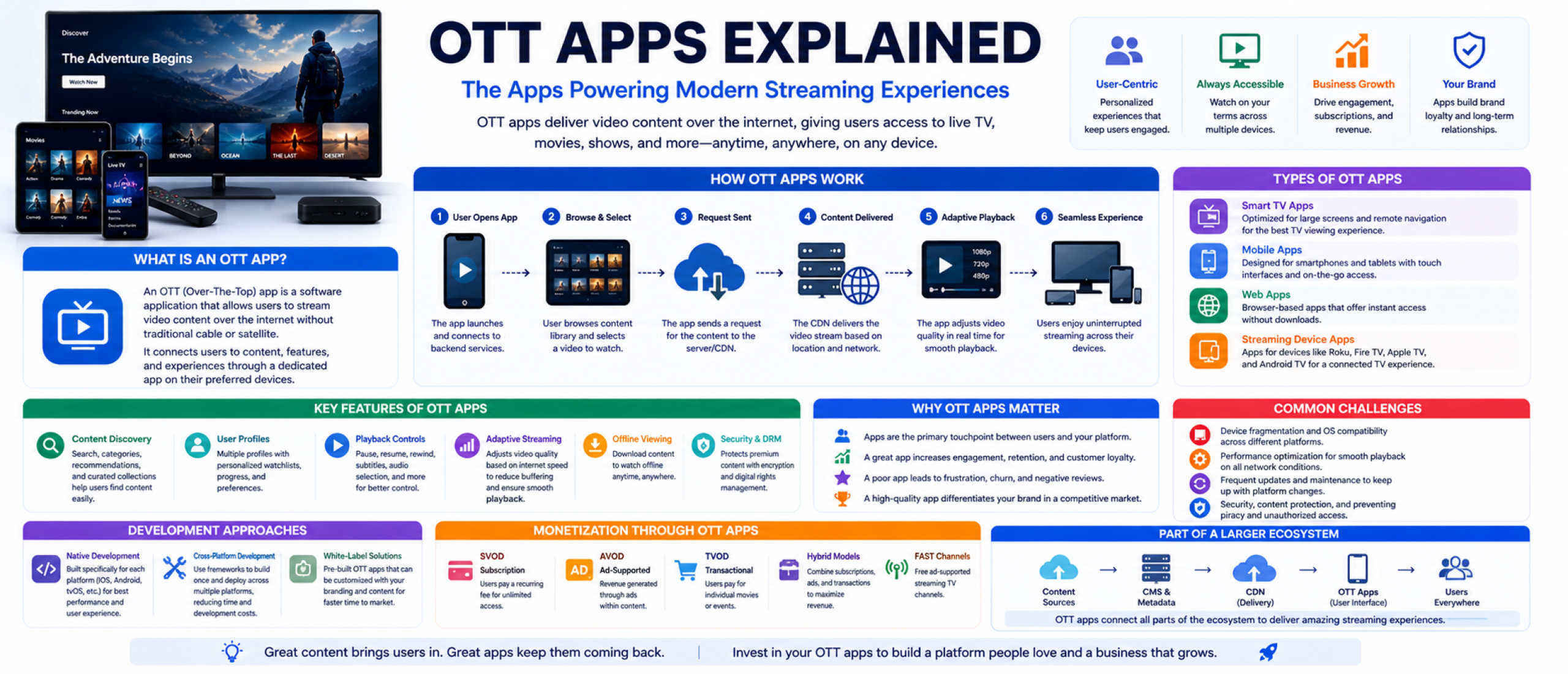
OTT apps are the primary way users access streaming content today. Whether on a smart TV, mobile device, or web browser, OTT apps act as the front-end experience that connects users to video platforms, content libraries, and playback systems.
For streaming businesses, OTT apps are not just a delivery channel. They are the product itself, shaping user experience, engagement, and retention.
What Is an OTT App?
An OTT app is a software application that allows users to stream video content over the internet without relying on traditional cable or satellite services. These apps are typically available on multiple devices and provide access to live TV, video on demand, or both.
OTT apps connect to backend systems that handle content storage, streaming delivery, and user management. From the user’s perspective, the app is where they browse, select, and watch content.
How OTT Apps Work
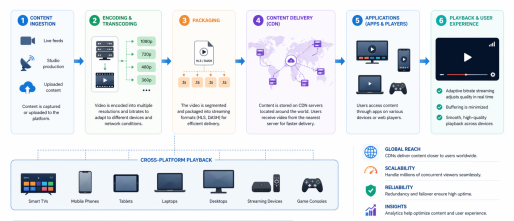
OTT apps operate as the interface layer of a streaming platform. When a user opens the app, it communicates with backend services to load content catalogs, user profiles, and recommendations.
When a video is selected, the app requests the stream from a content delivery network. The video player inside the app then handles playback, buffering, and quality adjustments based on network conditions.
This process happens in real time, creating a seamless viewing experience across devices.
Types of OTT Apps
OTT apps can be categorized based on the devices they are built for. Most platforms support multiple app types to reach a wider audience.
Smart TV Apps
Smart TV apps are designed for large-screen viewing and remote-based navigation. They are often optimized for lean-back experiences, similar to traditional television.
These apps are important for user engagement because they provide the most immersive viewing environment.
Mobile Apps
Mobile OTT apps are built for smartphones and tablets. They prioritize touch interaction, portability, and quick access to content.
Mobile apps are often the most widely used entry point for OTT services due to the popularity of mobile devices.
Web Apps
Web-based OTT apps run in browsers and provide instant access without requiring downloads. They are useful for reaching users on desktops and laptops.
Web apps also play a key role in onboarding and user acquisition.
Streaming Device Apps
OTT apps are also built for dedicated streaming devices. These apps combine the convenience of app-based access with a television viewing experience.
They are widely used in home entertainment setups.
Key Features of OTT Apps
Successful OTT apps include features that enhance user experience and drive engagement.
Content Discovery
Users should be able to easily browse and search for content. This includes categories, recommendations, and curated collections.
User Profiles
Profiles allow multiple users to have personalized experiences within the same account. This improves engagement and content relevance.
Playback Controls
Features such as pause, resume, skip, and subtitles are essential for a smooth viewing experience.
Adaptive Streaming
OTT apps use adaptive bitrate streaming to adjust video quality based on internet speed. This helps prevent buffering and ensures consistent playback.
Offline Viewing
Some OTT apps allow users to download content for offline viewing, improving accessibility in low-connectivity environments.
Why OTT Apps Matter for Streaming Platforms
OTT apps are the main touchpoint between users and your platform. A well-designed app can increase engagement, reduce churn, and improve overall user satisfaction.
Poor app performance, slow navigation, or unreliable playback can quickly lead to user drop-off. This makes app quality a critical factor in the success of any OTT service.
OTT apps also influence brand perception. A polished, intuitive interface can differentiate your platform in a competitive market.
OTT Apps and User Experience
User experience is one of the biggest differentiators in OTT platforms. OTT apps need to be fast, responsive, and easy to navigate.
Design elements such as layout, search functionality, and recommendation systems all contribute to how users interact with content.
Consistency across devices is also important. Users expect a seamless experience whether they are watching on a phone, TV, or browser.
Development Approaches for OTT Apps
There are different approaches to building OTT apps, depending on resources and goals.
Native Development
Native apps are built specifically for each platform, such as iOS or Android. They offer the best performance and user experience but require more development effort.
Cross-Platform Development
Cross-platform frameworks allow developers to build apps that run on multiple devices using a shared codebase. This reduces development time but may involve trade-offs in performance.
White-Label Solutions
Some platforms offer pre-built OTT apps that can be customized with branding and content. This approach allows for faster deployment with less technical complexity.
Common Challenges with OTT Apps
Building and maintaining OTT apps comes with several challenges.
Device fragmentation can make it difficult to ensure consistent performance across platforms. Different screen sizes, operating systems, and hardware capabilities must be accounted for.
Maintaining app updates and compatibility is another ongoing task. Platforms frequently update their operating systems, requiring continuous development effort.
Performance optimization is also critical. Slow load times, buffering issues, or crashes can negatively impact user experience and retention.
OTT Apps and Monetization
OTT apps play a key role in monetization strategies. They integrate payment systems, advertising frameworks, and subscription management tools.
Whether the platform uses subscriptions, ads, or transactions, the app is where users interact with these models.
A well-integrated monetization experience can increase conversion rates and overall revenue.
How OTT Apps Fit Into the Bigger Picture
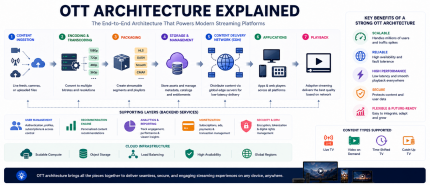
OTT apps are just one part of a larger streaming ecosystem. They work alongside backend systems, CDNs, and content management platforms to deliver a complete service.
Understanding how OTT apps fit into this architecture helps clarify their role in the overall platform strategy.
For any OTT business, investing in high-quality apps is essential for delivering a competitive and scalable streaming experience.