What Is AVOD?
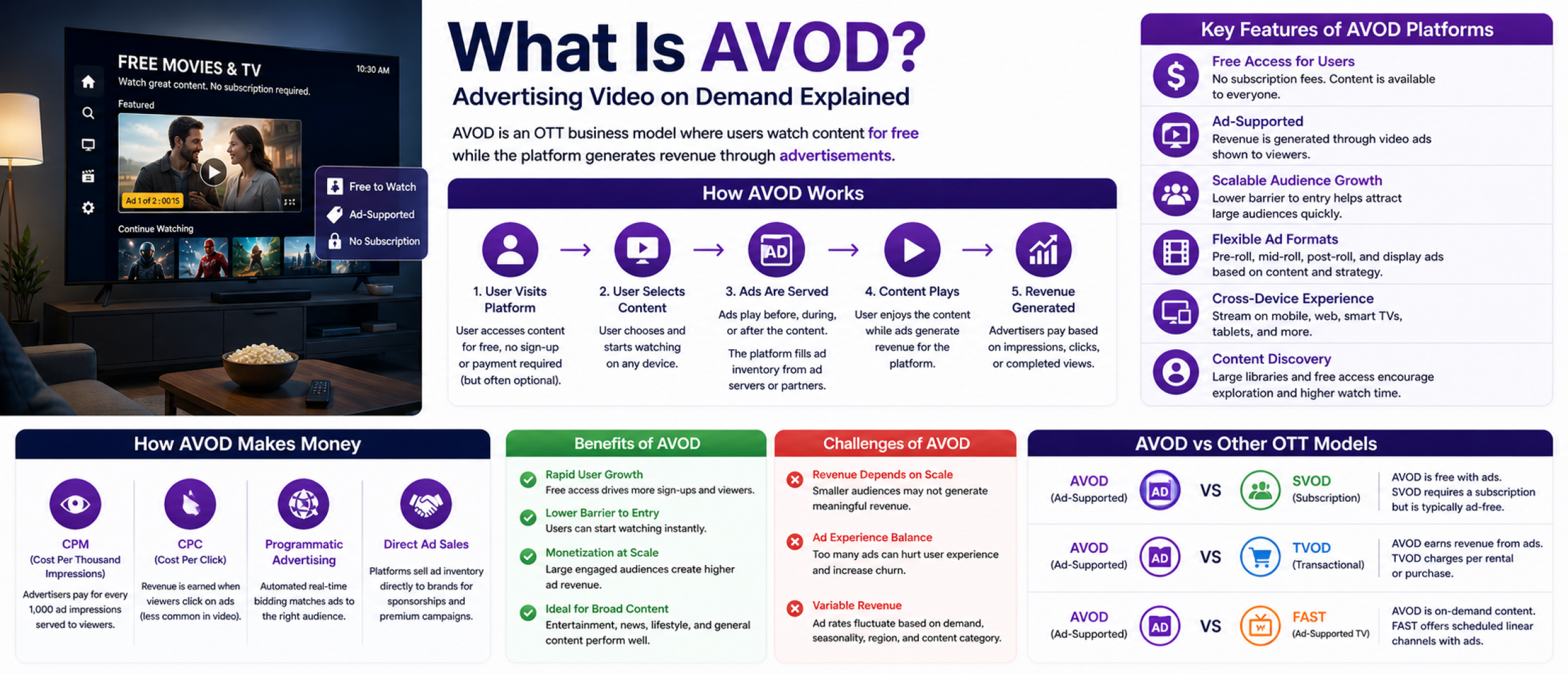
AVOD, or advertising video on demand, is an OTT business model where users watch content for free while the platform generates revenue through ads. Instead of paying a subscription fee, viewers access content in exchange for viewing advertisements.
This model is widely used by free streaming platforms, broadcasters, news services, and large content libraries looking to reach broad audiences at scale.
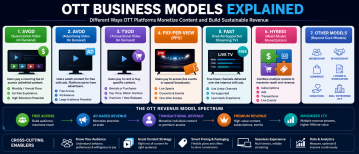
AVOD is a core OTT monetization strategy and is often combined with subscription or transactional models. For a full breakdown, see the OTT business models explained guide.
How AVOD Works
In an AVOD model, users can access content without paying. Instead, ads are inserted before, during, or after video playback. These ads generate revenue based on impressions, clicks, or completed views.
The platform integrates with ad servers and demand sources to fill available ad inventory. Ads may include pre-roll, mid-roll, or post-roll formats, depending on content length and viewing experience.
AVOD platforms rely on audience scale, watch time, and targeting capabilities to maximize ad revenue. The more engaged viewers are, the more monetization opportunities the platform creates.
Key Features of AVOD Platforms
Free Access
Users can watch content without paying, reducing friction and increasing audience growth.
Ad-Supported Revenue
Revenue comes from advertisers who pay to reach viewers through video ads.
Scalable Audience Growth
Lower barriers to entry make it easier to attract large numbers of users quickly.
Flexible Ad Formats
Platforms can use pre-roll, mid-roll, post-roll, or display ads depending on content and strategy.
Content Discovery
Large libraries and free access encourage exploration and increase total watch time.
Cross-Device Availability
Users can access content across mobile, web, and connected TV devices.
How AVOD Makes Money
CPM (Cost Per Thousand Impressions)
Advertisers pay based on the number of times an ad is shown to viewers.
CPC (Cost Per Click)
Revenue is generated when users click on ads, though this is less common in video streaming.
Programmatic Advertising
Automated systems match ads to viewers in real time, improving efficiency and fill rates.
Direct Ad Sales
Platforms can sell ad inventory directly to brands for higher-value campaigns and sponsorships.
Benefits of AVOD
Rapid User Growth
Free access makes it easier to attract and retain a large audience.
Lower Barrier to Entry
Users do not need to commit financially, increasing engagement and trial.
Monetization at Scale
Large audiences and high watch time can generate significant ad revenue.
Ideal for Broad Content
General entertainment, news, and lifestyle content perform well in ad-supported environments.
Challenges of AVOD
Revenue Depends on Scale
Smaller platforms may struggle to generate meaningful revenue without a large audience.
Ad Experience Balance
Too many ads can reduce user satisfaction and increase drop-off rates.
Variable Revenue
Ad rates fluctuate based on demand, seasonality, geography, and content category.
AVOD vs Other OTT Models
AVOD vs SVOD
AVOD is free and ad-supported, while SVOD requires a subscription but typically offers an ad-free experience.
AVOD vs TVOD
AVOD monetizes through ads, while TVOD charges users per piece of content.
AVOD vs FAST
AVOD is on-demand viewing, while FAST delivers scheduled linear channels with ads.
When to Use the AVOD Model
AVOD works best for platforms aiming to reach large audiences quickly, especially when content is broadly appealing and frequently consumed.
If your goal is growth, reach, and engagement rather than immediate subscription revenue, AVOD can be a strong starting point. Many platforms later combine AVOD with subscriptions or premium content to create a hybrid monetization strategy.